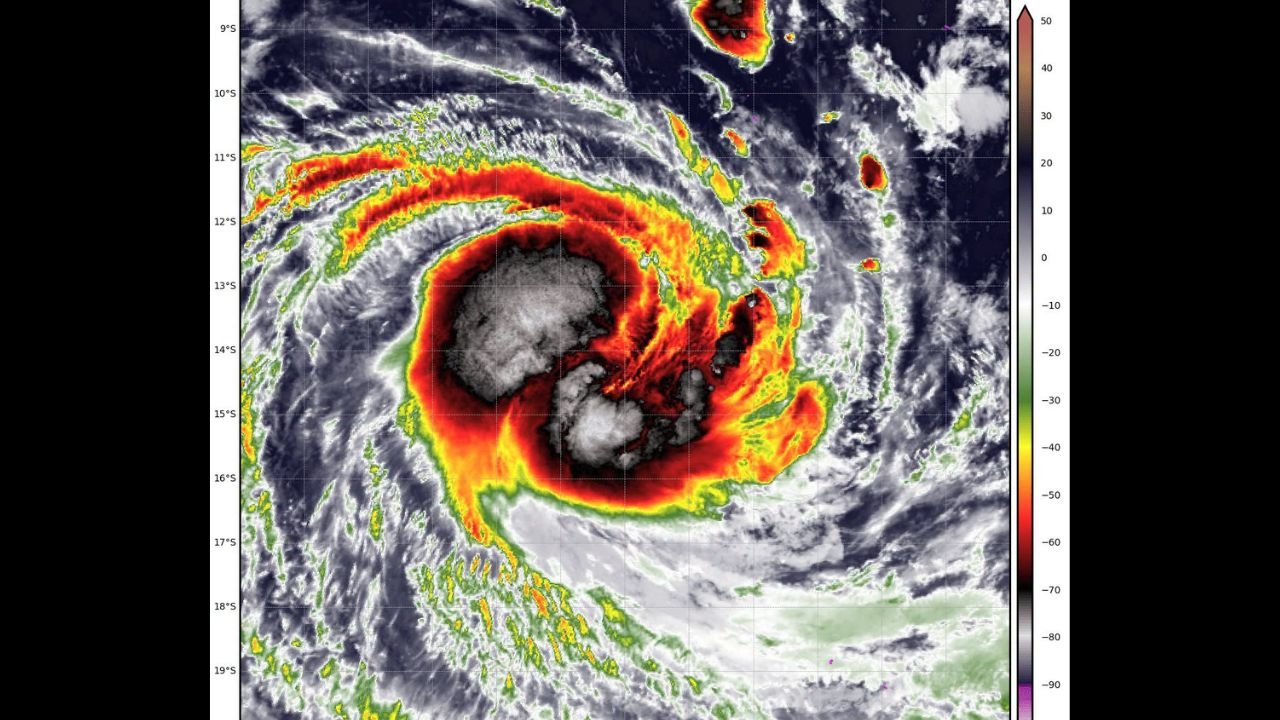
Tropical Cyclone Wati was a Category 2 system tracking toward the southern Cook Islands in official updates on October 18, 2026. The cyclone is the first named system of the 2026–27 South Pacific season, forming before the usual November start. Fiji’s weather service said it posed no direct threat to Fiji, while Cook Islands authorities issued local advice. Forecast positions and intensity figures need to be read with their issue times because the storm is still developing.
Where Was Tropical Cyclone Wati?
The Fiji Meteorological Service placed Wati near 16.7° south, 161.6° west at 06:00 UTC on October 18. Its marine bulletin identified the system as Category 2, with a central pressure of 978 hectopascals.
An earlier bulletin placed the centre farther north-west. The different coordinates describe the cyclone at different times rather than conflicting locations for the same moment. Its reported movement was generally toward the south-east.
Tracking information later summarised by weather services placed the system north-northwest of Rarotonga. Those distances are useful for understanding the approach, but a forecast track is not a guarantee that the centre will cross a particular island.
Which Areas Were the Main Concern?
The southern Cook Islands were the focus of the developing weather threat. Official and regional updates discussed Wati’s movement toward that part of the Pacific, with the Cook Islands Meteorological Service providing local bulletins.
The risk extends beyond the exact point where the centre passes. Strong winds, heavy rain and rough seas can affect places away from the forecast line. A map showing the centre offshore should therefore not be interpreted as a promise of calm conditions along nearby coasts.
The local warning area and instructions are more useful for residents and visitors than simply comparing a hotel’s location with the centre line on a tracking map.
Does Wati Threaten Fiji?
Fiji Meteorological Service director Misaeli Funaki said Wati posed no direct threat to Fiji in the October 18 update. The cyclone’s position and direction placed the immediate concern farther east, toward the Cook Islands.
This statement concerns Wati’s direct cyclone threat. It should not be stretched into a claim that every part of Fiji has no weather warnings of any kind. Separate wind, rain or marine advisories can exist for other weather conditions.
Similarly, a South Pacific cyclone headline does not establish an Australian landfall threat. Location, movement and the responsible warning agencies need to be considered before attaching an event to Australia.
Why Its Early Formation Matters
The South Pacific cyclone season normally runs from November through April. Wati developed in October, making it an early system associated with the 2026–27 season.
Seasonal dates describe when most cyclones occur; they do not prevent a storm from forming outside that period. Warm water, atmospheric conditions and the organisation of a developing low determine whether an individual system strengthens.
Fiji’s monitoring sequence identified a disturbance before it became a named cyclone. The system was assigned the name Wati on October 16, after earlier monitoring of its development.
What Category 2 Means Here
Category 2 is the classification used in the regional cyclone updates checked for this article. It indicates a developed tropical cyclone capable of dangerous conditions, particularly at sea and near the strongest part of the circulation.
Different agencies can use different wind-averaging periods and classification systems. A number shown by one tracking service should therefore not be compared directly with another scale without checking the method.
The local official bulletin is the appropriate reference for warnings. A cyclone’s category also does not describe every hazard: rainfall, coastal conditions and wave action can be important even when the wind category remains unchanged.
Is This the Same Wati as the 2006 Cyclone?
No. The October 2026 cyclone is a separate storm. The name Wati was also used for a South Pacific cyclone in 2006, which followed a different track and affected a different weather situation.
Older maps and reports can appear in searches because of the shared name. Their dates need to be checked before using them to describe current conditions. A 2006 warning for an island or an Australian region is not a current warning for the 2026 system.
Two Recent Related Social Media Posts
October 2026 — Fiji Meteorological Service on Facebook: The service announced that Wati had strengthened to Category 2 and was tracking toward the southern Cook Islands. The post reflected the official regional monitoring of the system.
October 17, 2026 — Cook Islands Tourism on Facebook: A visitor advisory provided information current to 3pm Cook Islands time. It addressed the developing cyclone situation for people travelling in the islands and should be read alongside subsequent local bulletins.
What Is the Latest Confirmed Position?
The checked October 18 bulletins identify a Category 2 cyclone moving toward the southern Cook Islands. These are time-stamped observations and forecasts, not a completed account of the storm. Any later change in intensity, track or local instructions should take precedence over an earlier update.