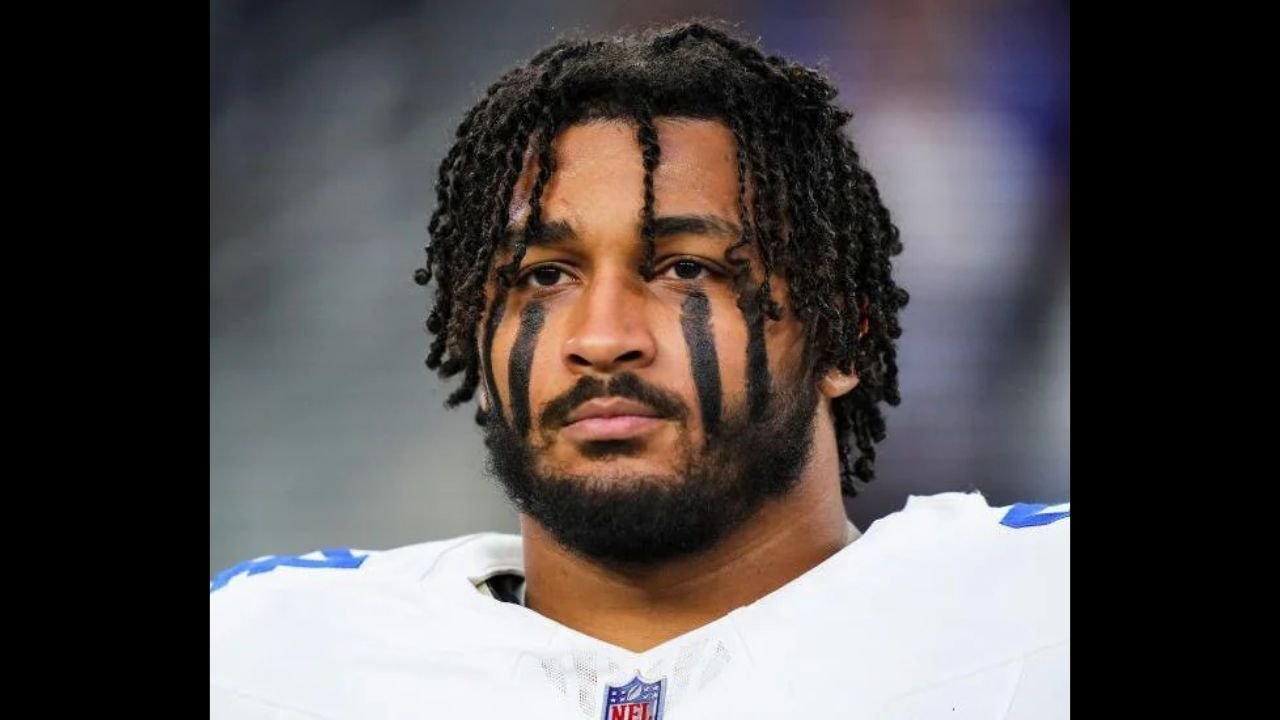
Marshawn Kneeland, the Dallas Cowboys defensive end, died by suicide on November 6, 2025, at the age of 24. His death followed a police pursuit and search in Frisco, Texas. Nearly eight months later, his family disclosed that a post-mortem examination had identified Stage 1 chronic traumatic encephalopathy (CTE), a brain condition associated with repeated head impacts. His passing also inspired the Cowboys’ Huddle94 mental health initiative, established to help players seek support.
Cause of Death
Marshawn Kneeland’s death was ruled a suicide involving a self-inflicted gunshot wound. He was found dead in Frisco, Texas, on November 6, 2025.
The news shocked the NFL community because Kneeland was only 24 and in the early stages of his professional football career.
He had joined the Dallas Cowboys as a second-round selection in the 2024 NFL Draft after an impressive college career at Western Michigan University.
His death came just days after he had scored his first NFL touchdown during a game against the Arizona Cardinals.
The sudden loss prompted condolences from teammates, coaches, fans and football organisations.
What Happened?
The events leading to Kneeland’s death began late on November 5, 2025, when Texas Department of Public Safety troopers attempted to stop his vehicle for a traffic violation.
According to authorities, Kneeland did not stop and became involved in a vehicle pursuit.
The pursuit ended after his truck crashed in Frisco, near the Dallas Cowboys’ training facilities.
Kneeland subsequently left the vehicle and fled on foot.
Law enforcement officers began searching the surrounding area, with additional concerns emerging about his emotional condition.
During the search, authorities received information suggesting that he might be experiencing a serious mental health crisis.
Police Search
As officers searched for Kneeland, his girlfriend contacted authorities and expressed concern about his safety.
She reportedly warned that he was armed and experiencing significant emotional distress.
Police continued searching the area before discovering his body during the early morning hours of November 6.
Authorities determined that his death resulted from a self-inflicted gunshot wound.
The circumstances raised questions about the pressures facing professional athletes and the importance of recognising signs of psychological distress.
However, the publicly available evidence does not establish one specific event or medical condition as the cause of his decision to take his life.
CTE Diagnosis
A significant development emerged in July 2026, when Kneeland’s family publicly disclosed the findings of a post-mortem brain examination.
Researchers at Boston University’s CTE Center identified Stage 1 chronic traumatic encephalopathy in Kneeland’s brain tissue.
CTE is a neurodegenerative disease associated with repeated impacts to the head, including those experienced in contact sports.
The condition can currently be definitively diagnosed only after death through examination of brain tissue.
Stage 1 represents an early level of the disease’s recognised neuropathological progression.
The findings attracted attention because Kneeland had played football professionally for a relatively short period.
His family chose to share the diagnosis to encourage greater awareness of brain health among athletes.
Did CTE Cause His Death?
There is no established medical conclusion that CTE directly caused Marshawn Kneeland’s suicide.
Although researchers confirmed the presence of the disease, they cautioned against treating the diagnosis as a complete explanation for his death.
Suicide is complex and can involve multiple interacting psychological, social, environmental and medical factors.
CTE has been associated with various neurological and behavioural symptoms, but researchers continue investigating how its pathology relates to individual experiences.
The presence of Stage 1 CTE does not prove that Kneeland experienced particular symptoms or that the condition determined his actions.
His family’s disclosure instead brought attention to the need for continued research into repeated head impacts and long-term brain health.
Who Was Kneeland?
Marshawn Kneeland was born on July 8, 2001, in Grand Rapids, Michigan.
He attended Godwin Heights High School before continuing his football career at Western Michigan University.
At Western Michigan, he developed into a productive defensive player known for his strength, physicality and ability to pressure opposing quarterbacks.
His college performances attracted NFL scouts and established him as a promising professional prospect.
The Dallas Cowboys selected him with the 56th overall pick in the 2024 NFL Draft.
He wore jersey number 94 and became part of the team’s defensive rotation.
His professional career was still developing when he died.
Final NFL Game
One of the most heartbreaking aspects of Kneeland’s passing was its timing.
Just days before his death, he had achieved an important career milestone during the Cowboys’ game against the Arizona Cardinals on November 3, 2025.
Kneeland scored his first NFL touchdown after recovering a blocked punt in the end zone.
The play represented a memorable moment for the young defensive end.
His achievement was celebrated by teammates and supporters, who saw him as a developing contributor to the Cowboys’ defence.
Only three days later, news of his death brought profound sadness to the organisation.
The contrast between that professional milestone and his sudden passing deeply affected the football community.
Huddle94 Initiative
Following Kneeland’s death, the Dallas Cowboys established Huddle94, a mental health support initiative named after his jersey number.
The programme was designed to encourage players to discuss emotional difficulties, personal challenges and everyday pressures in supportive small-group environments.
Rather than focusing exclusively on athletic performance, Huddle94 promotes conversations about life outside football.
Its player-led approach aims to make seeking help feel more accessible and reduce the stigma associated with discussing mental health.
The initiative reflects the organisation’s commitment to honouring Kneeland while strengthening resources available to current players.
His Legacy
Marshawn Kneeland’s death left a lasting impact on the Dallas Cowboys and the wider NFL community.
He was remembered as a talented young player whose career held considerable promise.
His family’s decision to disclose his Stage 1 CTE diagnosis in July 2026 added an important dimension to discussions about football safety and brain health.
Meanwhile, the Cowboys’ Huddle94 initiative created a continuing tribute centred on emotional support and communication.
One year after his death, Kneeland’s story remains a reminder that professional athletes can face serious personal struggles regardless of their achievements.
His legacy now extends beyond football, contributing to conversations about mental health, neurological research and the importance of accessible support.