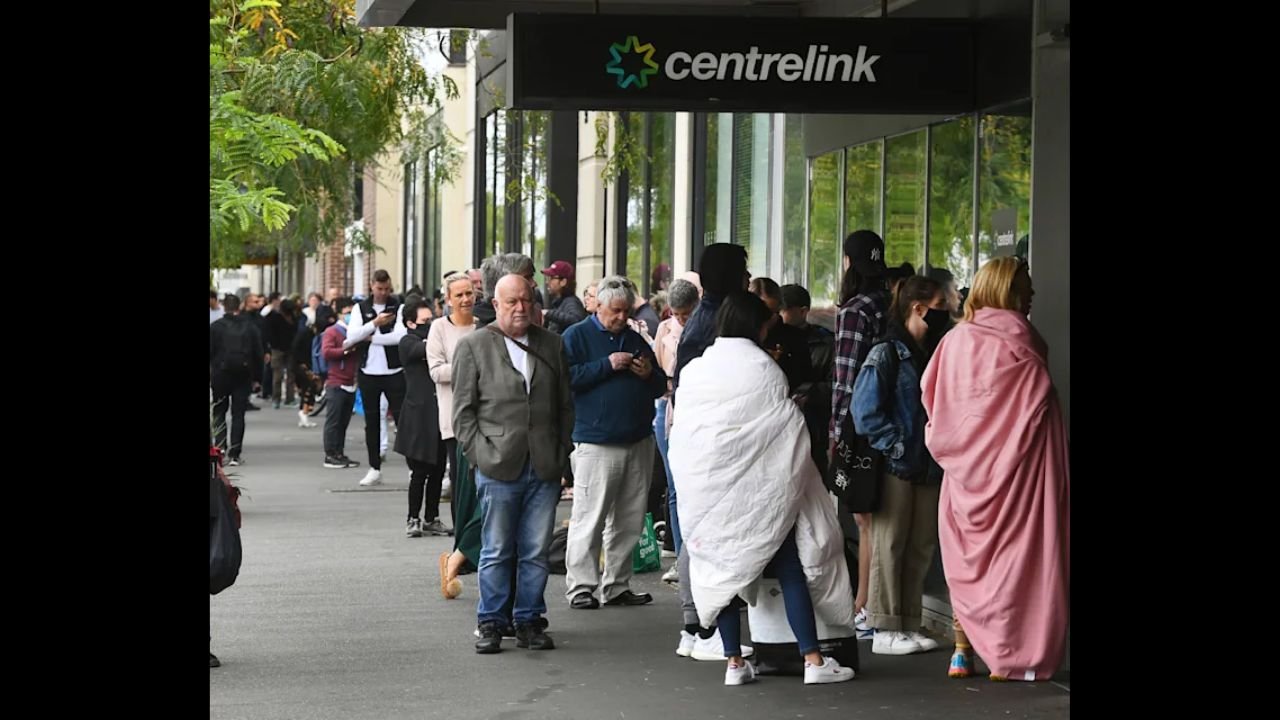
Millions of Australians receiving Centrelink payments are struggling to cover everyday expenses, with new research revealing that 76 per cent of people in households relying on JobSeeker are living below the poverty line.
The findings come as the federal government announces an additional $4.7 million in emergency relief funding to help Australians facing financial hardship.
Despite regular increases to Centrelink payments, researchers warn that JobSeeker, Youth Allowance and Parenting Payment remain insufficient for many households dealing with rising living costs.
A new report from the Australian Council of Social Service (ACOSS) and the University of New South Wales (UNSW) highlights the financial pressure facing people who depend on government income support.
Millions in Poverty
According to the research released during Anti-Poverty Week in October 2026, approximately 3.7 million Australians are experiencing poverty.
Of those, around 1.9 million live in households relying on government support payments.
The figures raise concerns about whether Australia’s income support system provides enough assistance for people unable to find employment, studying full-time or raising children.
Researchers found that many recipients remain hundreds of dollars short of the income needed to meet basic living expenses.
The report identifies JobSeeker recipients as particularly vulnerable, with a substantial proportion unable to reach the poverty threshold even while receiving regular government assistance.
JobSeeker Struggles
The research reveals significant poverty rates among households depending primarily on three major Centrelink payments.
- JobSeeker Payment: 76 per cent living below the poverty line.
- Youth Allowance: 73 per cent living below the poverty line.
- Parenting Payment: 71 per cent living below the poverty line.
These percentages relate to people living in households mainly supported by the respective payments, rather than every individual receiving Centrelink assistance.
For a single adult, the report uses a poverty benchmark of $584 per week after housing costs.
However, the financial circumstances of households vary depending on rent, family size, employment income and other available support.
The findings also show that poverty among income support households is not a temporary concern. In 2022–23, approximately half of people in households mainly dependent on government payments were experiencing poverty.
$331 Weekly Gap
One of the report’s most concerning findings is the difference between household income and the poverty threshold.
Researchers calculated that people in households relying on JobSeeker had incomes averaging $331 per week below the poverty line.
For households primarily receiving Parenting Payment, the average shortfall was $236 per week.
These gaps demonstrate why some recipients continue struggling with groceries, electricity, transport and other essential expenses.
UNSW Professor Carla Treloar highlighted the size of these income shortfalls, while ACOSS chief executive Cassandra Goldie called for stronger financial support.
ACOSS argues that routine payment increases have not adequately addressed the financial difficulties experienced by people receiving unemployment and other income support benefits.
Higher Payments Sought
ACOSS is urging the federal government to increase JobSeeker, Youth Allowance and Parenting Payment to a level comparable with the Age Pension and Pension Supplement.
The organisation has proposed a minimum payment of $618 per week, based on the rates referenced in its October 2026 recommendations.
This is an advocacy proposal, not an approved Centrelink payment increase.
The council believes higher payments would help recipients afford essential goods and reduce the number of households living in poverty.
However, any permanent increase would require a government policy decision and appropriate funding arrangements.
For now, eligible Australians continue receiving payments according to existing Centrelink rules and individual circumstances.
September Increase
Centrelink recipients received their latest scheduled indexation adjustment on 20 September 2026, affecting eligible payment categories.
Indexation is designed to help certain government payments keep pace with changes in living costs.
However, the timing and calculation of increases differ between payment types.
ACOSS maintains that these adjustments are not equivalent to a substantial increase in the underlying payment rates.
For people already facing large weekly income shortfalls, a modest increase may provide some relief without eliminating financial hardship.
Recipients can check their current payment details through their Centrelink online account linked to myGov.
Students Under Pressure
Financial difficulties are also affecting Australians studying while receiving Youth Allowance.
Perth student Chae Oliver, 23, who is completing full-time event management studies at TAFE, described the difficulty of meeting living expenses despite receiving government assistance.
Oliver continues working alongside studying to cover essential costs.
Non-essential expenses, including vehicle maintenance, sometimes need to be postponed because available income is limited.
The experience reflects the challenges facing students who must balance education, employment and basic household expenses.
Even with September’s payment adjustment, Oliver indicated that the increase would make little difference to their overall financial position.
$4.7 Million Relief
Alongside the poverty report, Social Services Minister Tanya Plibersek announced an additional $4.7 million in funding for frontline organisations assisting financially vulnerable Australians.
The funding is intended to strengthen emergency services providing food, clothing, financial counselling and other essential support.
According to the government announcement, the package includes:
- $2 million shared among OzHarvest, Good360, Foodbank and SecondBite.
- A 15 per cent funding increase for regional emergency relief services.
- $1.1 million for the National Debt Helpline to support access to free financial counselling.
The additional funding targets organisations already helping households experiencing immediate financial difficulties.
Importantly, the $4.7 million package is funding for support services, not a direct cash bonus for JobSeeker recipients.
Australians should therefore not expect an automatic Centrelink payment arising from this announcement.
Where to Get Help
Australians struggling to afford essentials can seek assistance through established community support services.
Foodbank and other emergency relief organisations may provide access to food or referrals to local assistance programs, depending on availability and eligibility.
People experiencing debt problems can contact the National Debt Helpline on 1800 007 007 for free and confidential financial counselling.
Centrelink recipients may also check whether they qualify for additional assistance, concessions or other payments through Services Australia.
Eligibility depends on personal circumstances and the rules applying to each benefit.
What Happens Next?
The latest findings have renewed discussion about the adequacy of Australia’s income support payments.
While the government’s $4.7 million emergency funding will provide additional resources for frontline services, it does not change the standard JobSeeker, Youth Allowance or Parenting Payment rates.
ACOSS continues to seek a larger permanent increase, arguing that existing payment levels leave many households unable to meet essential living costs.
For recipients, the key distinction is that emergency relief funding has been announced, but the proposed $618 weekly income support rate has not been approved.
Further changes to Centrelink payments would need to be formally announced by the government and reflected in Services Australia’s payment information.