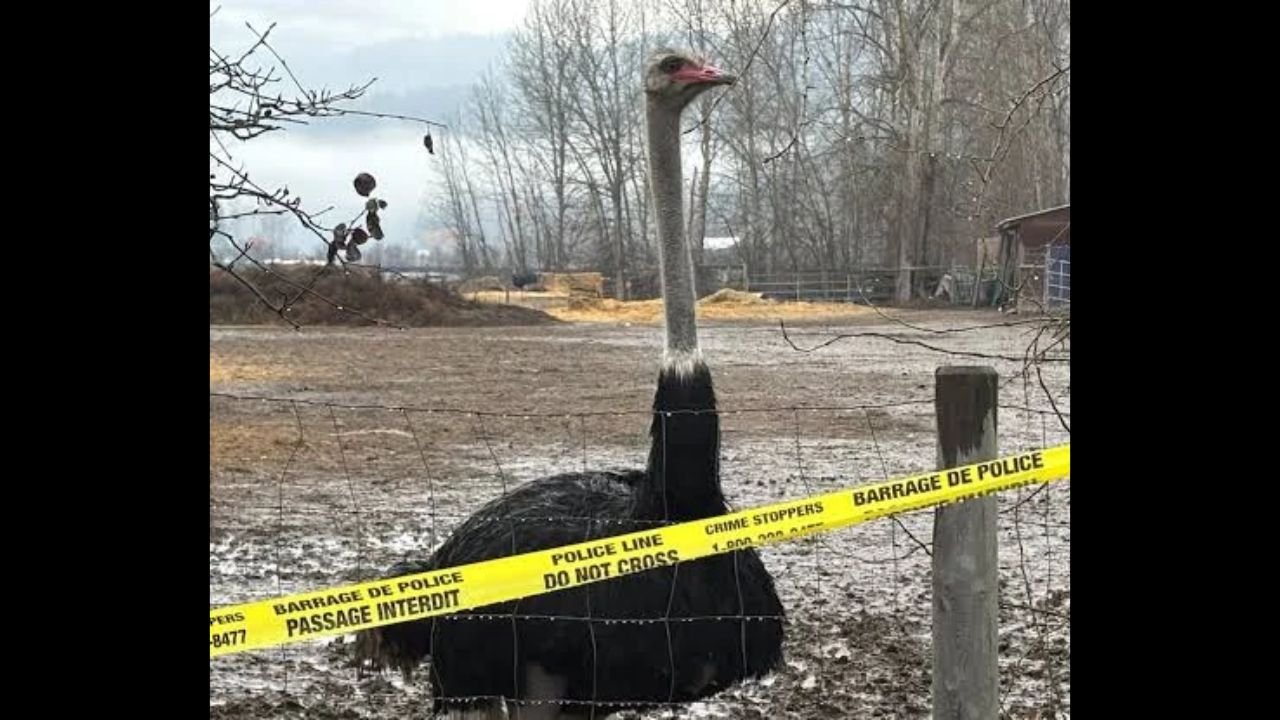
Universal Ostrich Farms in Edgewood, British Columbia, has filed a civil lawsuit against the Canadian Food Inspection Agency (CFIA), the federal government, and the B.C. RCMP, alleging that 37 ostriches remain unaccounted for following a controversial government-ordered cull. The lawsuit, filed on October 30, 2026, also seeks compensation connected to a proposed dietary supplement business that the owners claim could have generated $200 million in revenue.
The case marks a new chapter in a dispute that began with an avian influenza outbreak in late 2024 and culminated in the destruction of the farm’s remaining flock in November 2025.
Why the Lawsuit?
Farm owners Karen Espersen and Dave Bilinski filed their claim in the Supreme Court of British Columbia.
The lawsuit challenges several aspects of the government’s actions during the avian flu response, including the handling of the birds, compensation calculations, and the alleged seizure of valuable farm materials.
The owners argue that the intervention caused substantial financial losses and damaged their property and business prospects.
Their allegations include claims involving trespass, nuisance, intrusion upon seclusion, and animal welfare concerns.
None of these allegations has been established as fact by a court.
37 Missing Ostriches
One of the central issues is the reported discrepancy in the number of ostriches present at the farm.
The owners claim that 351 ostriches were on the property when federal authorities served their quarantine warrants.
However, the CFIA reportedly offered compensation for only 314 birds.
That leaves a difference of 37 ostriches, which the owners say has not been adequately explained.
The lawsuit seeks answers about what happened to those animals and why they were excluded from the compensation calculation.
The discrepancy is an allegation based on the owners’ stated count. It does not independently establish that 37 birds disappeared or were improperly handled.
$200 Million Claim
The lawsuit also includes a substantial claim involving a proposed dietary supplement business.
According to the owners, the farm was preparing to commercialise a product developed using ostrich eggs.
They allege that the planned business could have generated approximately $200 million in revenue.
The product was reportedly connected to weight management research.
The owners argue that the government’s intervention disrupted their commercial plans before the product could reach the market.
However, projected revenue is different from realised earnings or proven financial losses.
The court would need to consider evidence supporting the business’s commercial prospects, development progress, and the alleged connection between government actions and the claimed losses.
Seized Ostrich Eggs
The farm alleges that CFIA personnel seized approximately 1,200 ostrich eggs during a 52-day period when authorities controlled access to the property.
The owners claim those eggs were important to their research and planned commercial activities.
Their lawsuit treats the alleged seizure as part of the financial damage caused by the government intervention.
However, the claim faces questions about whether the proposed dietary supplement business remained commercially viable.
A previous investigation by CBC’s The Fifth Estate reported that research partners had already abandoned the weight-loss project after the flock was exposed to avian influenza.
That reporting could become relevant when assessing the claimed $200 million in lost revenue.
Compensation Dispute
The CFIA reportedly offered the farm $942,000 in compensation, equivalent to approximately $3,000 per ostrich for the 314 birds included in its calculation.
The owners argue that the amount does not reflect the true value of their flock.
They maintain that the birds were valuable not only as livestock but also because of their potential scientific and commercial applications.
The disagreement raises questions about how compensation should be calculated when animals are destroyed under disease-control regulations.
The government and farm owners may have different assessments of market value, research value, and eligibility for compensation.
The lawsuit seeks to challenge the amount offered.
Cruelty Allegations
The statement of claim also accuses government personnel and animal handlers of mistreating the ostriches.
The owners allege that some actions taken before and during the cull amounted to animal cruelty or inhumane treatment.
These accusations concern the methods used to manage and destroy the flock.
Animal welfare questions were already a major part of the public controversy surrounding the operation.
However, the lawsuit’s descriptions remain allegations.
Any legal determination about improper treatment would depend on evidence examined through the court process.
Property Damage
Beyond the loss of livestock and business opportunities, the owners allege that the government operation damaged their property.
The claim names the B.C. RCMP and CFIA in connection with alleged trespass, nuisance, and interference with the owners’ privacy.
The farm also argues that the intervention caused lasting financial harm to the property’s value.
These allegations add another dimension to the dispute, extending it beyond compensation for destroyed animals.
The court will need to determine whether the defendants’ actions were legally authorised and whether any compensable damage occurred.
Avian Flu Outbreak
The controversy began in late 2024, when an outbreak of highly pathogenic avian influenza affected the farm.
Approximately 70 ostriches reportedly died during the outbreak.
The CFIA subsequently ordered the destruction of the surviving flock under its disease-control policies.
The agency’s approach reflected a strategy commonly described as stamping out, which involves removing infected or potentially exposed animals to limit the spread of disease.
The owners opposed the order, arguing that the surviving ostriches had developed immunity.
However, that claim did not persuade the courts to overturn the federal order.
Ten-Month Battle
The dispute developed into a prolonged legal fight that attracted attention across Canada and internationally.
The farm’s owners pursued legal challenges while supporters protested the planned destruction of the birds.
The case eventually reached the Supreme Court of Canada, but the final attempt to stop the cull was unsuccessful.
Following the legal proceedings, authorities carried out the destruction of the flock in November 2025.
The operation ended the immediate dispute over whether the birds could remain alive.
However, it did not resolve questions about compensation, property damage, or the financial consequences claimed by the owners.
What Happens Next?
The newly filed civil lawsuit shifts the dispute toward financial accountability.
The court may need to examine livestock records, compensation documents, business projections, research agreements, and evidence concerning the government’s conduct.
The defendants will also have an opportunity to respond to the allegations.
Filing a lawsuit does not mean the owners have proven their claims or that the defendants have been found liable.
The ultimate outcome will depend on the evidence, applicable law, and any rulings or settlement reached during the proceedings.
Final Words
The BC ostrich farm missing birds lawsuit centres on 37 allegedly unaccounted-for ostriches, a disputed $942,000 compensation offer, and a claimed $200 million commercial opportunity.
Universal Ostrich Farms’ owners are seeking answers and financial compensation following the November 2025 cull.
The case could bring renewed scrutiny to how disease-control measures are implemented and how affected businesses are compensated.
For now, the allegations remain unproven, and the Supreme Court of British Columbia will determine how the civil dispute proceeds.