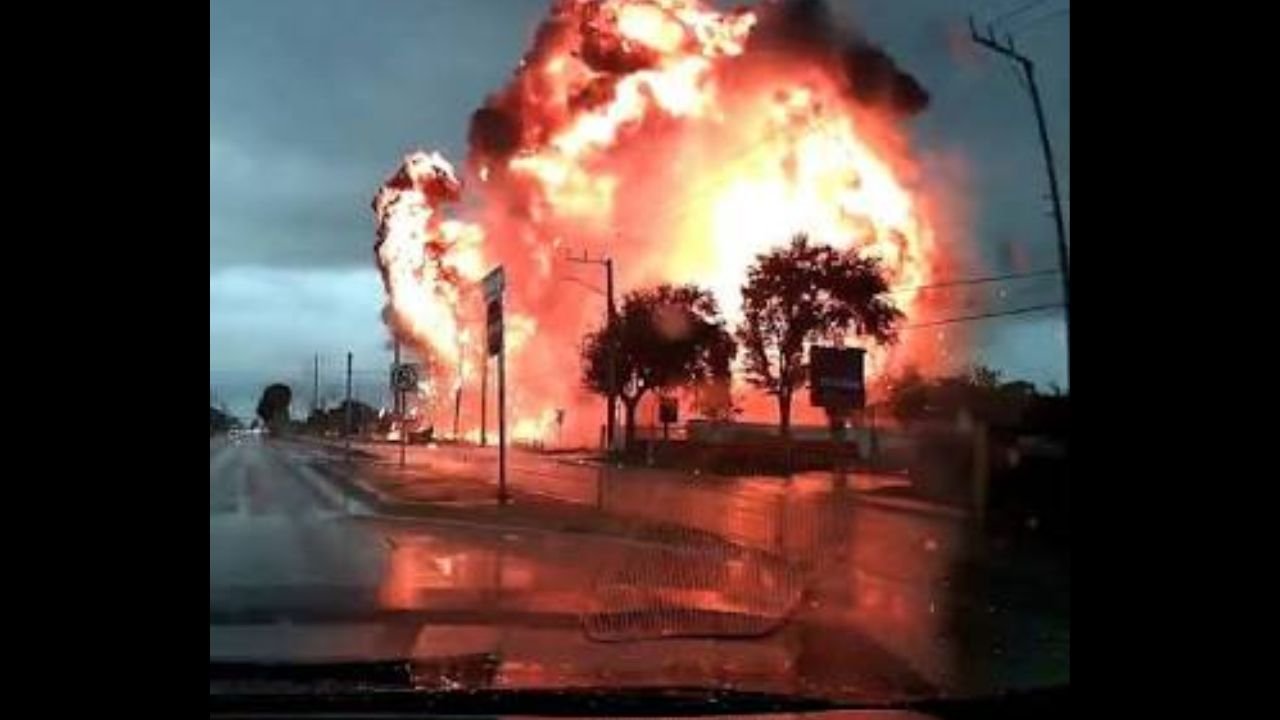
Nine people reportedly died when a private Learjet 60 crashed in Greenacres, Palm Beach County, Florida, on Sunday, November 1, 2026. The aircraft, identified as N722BD, was traveling from Austin, Texas, toward Eleuthera in the Bahamas when it suddenly descended and struck the ground near a residential area. The impact reportedly triggered a massive fire, damaged nearby infrastructure, and forced hundreds of residents to evacuate. Federal aviation authorities are investigating the disaster, with severe weather and possible aircraft icing among the issues requiring examination.
What Happened?
The Florida aviation disaster occurred at approximately 12:50 p.m. local time on November 1, 2026, according to initial reports.
The private jet was flying over Palm Beach County when its flight path changed dramatically.
Witness accounts and early flight-tracking information described an extremely steep descent shortly before the aircraft struck the ground.
The Learjet crashed near a roadway and residential properties in Greenacres, creating a large fireball that was visible from the surrounding area.
Emergency crews responded to the scene as firefighters worked to contain the blaze and secure the damaged area.
The accident quickly attracted national and international attention because of the reported death toll and the circumstances of the aircraft’s final moments.
Nine People Killed
All nine people reportedly aboard the Learjet died in the crash, including passengers and crew members.
Initial coverage indicated that nobody on the ground was killed or injured, despite the aircraft coming down close to occupied properties and a busy road.
The crash caused extensive damage around the impact site.
Authorities faced the difficult task of recovering victims, documenting wreckage, and determining whether nearby buildings or utilities had been affected.
The identities of all nine occupants had not been independently confirmed in the information available for this article.
Official identification and family notifications remain important before publishing a complete passenger list.
Aircraft Details
The aircraft involved was reported to be a Learjet 60 bearing registration N722BD.
The Learjet 60 is a twin-engine business jet commonly used for private and charter flights.
It is designed for high-altitude operations and can travel significant distances between airports.
According to the reported itinerary, the aircraft departed from Austin, Texas, and was heading toward Eleuthera, an island in the Bahamas.
The planned journey would have taken the jet across the southeastern United States before continuing over water.
Investigators will need to establish the aircraft’s maintenance history, operating conditions, and exact flight sequence.
Final Moments
Reports about the aircraft’s final communications have raised questions about what the crew experienced before the crash.
The flight reportedly encountered severe turbulence and possible ice accumulation while traveling through an area affected by thunderstorms.
Accounts attributed to air traffic control recordings describe an increasingly urgent situation inside the cockpit.
The crew reportedly communicated concerns about the aircraft’s condition before the sudden descent.
However, the exact wording, timing, and context of those communications require verification against authenticated recordings and official investigative documents.
These details may eventually help investigators reconstruct the final minutes of the flight.
Rapid Descent
One of the most alarming aspects of the reported accident was the aircraft’s unusually steep descent.
Early flight-tracking accounts suggested that the Learjet descended at a rate exceeding 30,000 feet per minute during part of its final flight.
Such a figure would represent an exceptionally rapid loss of altitude.
However, flight-tracking measurements can contain gaps or errors, particularly during abnormal aircraft movements.
Investigators must therefore compare available tracking information with radar records and other technical evidence.
The reported descent rate alone cannot establish the aircraft’s exact speed, structural condition, or cause of the accident.
Crash Damage
The impact reportedly created a substantial crater and damaged sections of the surrounding roadway.
Fire and debris affected the immediate crash area, requiring emergency personnel to restrict access while conducting rescue and recovery operations.
Reports also indicated that approximately 600 residents of a nearby mobile-home community were evacuated as a precaution.
Temporary shelters were reportedly arranged for displaced residents while authorities assessed potential hazards.
Road closures and emergency operations disrupted movement through the surrounding neighborhood.
The absence of reported ground fatalities was particularly significant given the aircraft’s proximity to residential properties.
Weather Questions
Severe weather has emerged as an important subject in early discussions about the Florida Learjet crash.
Thunderstorms can expose aircraft to turbulence, heavy precipitation, and rapidly changing atmospheric conditions.
Aircraft icing is another potential hazard when moisture freezes on exposed surfaces under suitable temperature conditions.
Ice accumulation can affect airflow and aircraft performance, making proper detection and protection systems essential.
Nevertheless, weather has not been established as the official cause of this crash.
Investigators must determine whether the reported conditions contributed to the accident or whether other technical or operational factors were involved.
Official Investigation
The Federal Aviation Administration (FAA) and National Transportation Safety Board (NTSB) are the principal American agencies involved in investigating civil aviation accidents.
The FAA oversees aviation safety and regulatory compliance, while the NTSB independently determines probable causes and issues safety recommendations.
For the reported Greenacres crash, investigators are expected to examine flight records, weather data, communications, wreckage, and aircraft systems.
Particular attention may be given to the reported icing conditions and the aircraft’s rapid descent.
A final determination should not be made until sufficient evidence has been collected and analyzed.
Community Response
The crash has reportedly caused widespread concern in Greenacres and the wider Palm Beach County community.
Residents near the impact area faced emergency evacuations, road restrictions, and uncertainty about damage to their neighborhood.
Florida Governor Ron DeSantis was quoted in media coverage comparing the aircraft’s descent to a missile falling from the sky.
The dramatic description reflected the reported severity of the impact, although it does not explain why the aircraft lost altitude.
Emergency responders and local authorities continued working to protect residents and manage the aftermath.
Latest Update
As of November 2, 2026, initial reports describe nine fatalities following the November 1 Learjet 60 crash in Greenacres, Florida.
The aircraft was reportedly traveling from Austin to the Bahamas when it encountered difficulties before descending sharply into a residential area.
Severe weather, turbulence, and possible icing have been mentioned in early coverage, but the official cause remains undetermined.
The focus now rests on identifying the victims, supporting affected families, assessing local damage, and establishing the sequence of events.
The Florida plane accident remains a major aviation tragedy, with the final explanation dependent on evidence gathered during the federal investigation.