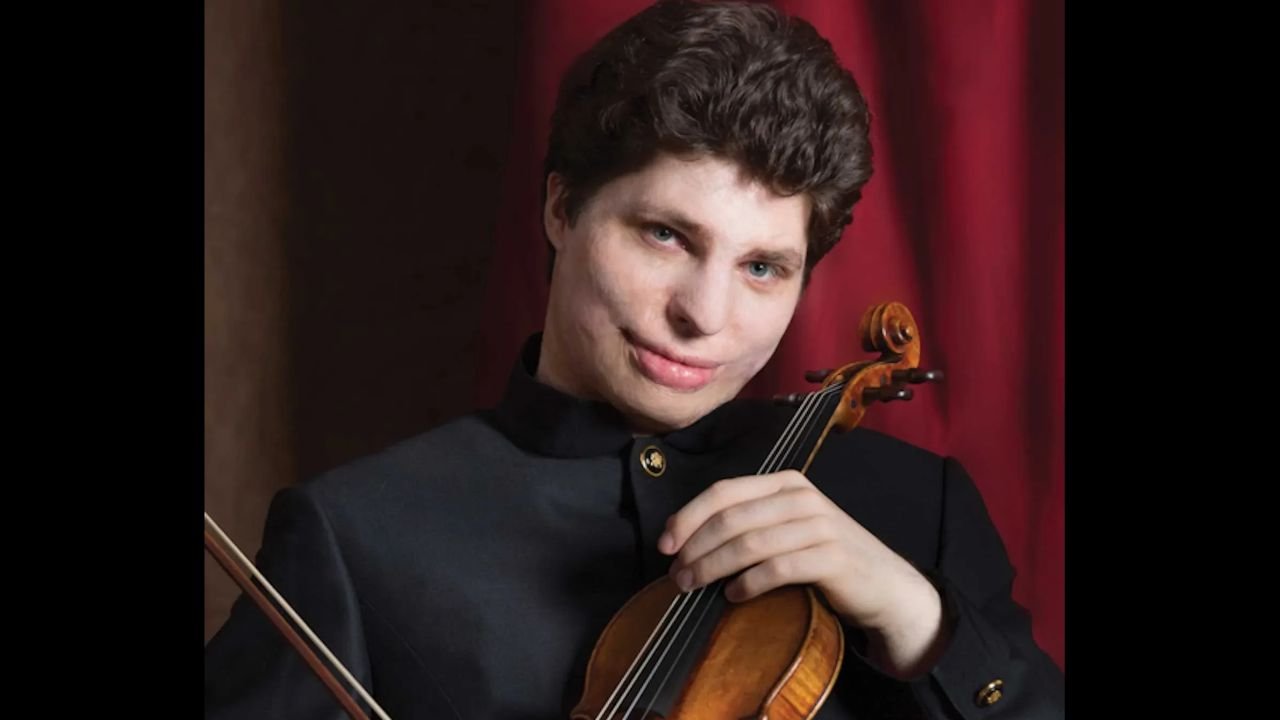
Grammy-winning violinist Augustin Hadelich survived a devastating fire accident in 1999 when he was just 15 years old. The incident occurred at his family’s farm in Tuscany, Italy, leaving him with severe burns across his face, upper body, and right arm. His injuries were so serious that his survival was initially uncertain. The accident interrupted his promising musical career, but after extensive treatment and rehabilitation, Hadelich returned to the violin and eventually became one of the world’s most respected classical performers.
What Happened?
Augustin Hadelich’s accident took place in 1999 at his family’s farm in Tuscany, Italy. At the time, he was a talented teenage violinist who had already spent years developing his musical abilities.
The unexpected fire caused extensive injuries, particularly to his face, chest, and right arm. For a violinist, damage to the right arm is especially concerning because it controls the bow, which produces sound and shapes musical expression.
The accident brought his early musical activities to an abrupt halt. Instead of continuing his development through lessons and performances, Hadelich faced a medical emergency that threatened both his life and his ability to play again.
Severe Burn Injuries
The injuries Hadelich suffered were life-threatening. Following the accident, he was transported to Germany for specialist medical treatment, where doctors worked to stabilize his condition and address the extensive damage caused by the burns.
His face, chest, and right arm were among the most seriously affected areas. Fortunately, his left hand escaped major injury.
This distinction mattered enormously to his musical future. Violinists use their left-hand fingers to control pitch on the fingerboard, while the right arm and hand guide the bow.
Although his left hand remained functional, the injuries to his bowing arm presented a major obstacle. Even basic movements required for playing would become difficult during his recovery.
Long Medical Recovery
Hadelich’s recovery lasted approximately two years and reportedly involved more than 20 reconstructive surgeries. His treatment required prolonged hospitalization, rehabilitation, and considerable physical effort.
Burn injuries can affect skin flexibility, muscle movement, and the ability to perform precise physical actions. These challenges were particularly significant for someone whose profession depended on controlled movements of the hands and arms.
Hadelich had to gradually regain mobility while adapting to the physical effects of his injuries.
His recovery was not simply about returning to everyday activities. He also needed to restore the coordination, strength, and flexibility necessary to handle a violin and bow at a professional standard.
Time Away From Music
The accident forced Hadelich to stop playing the violin for approximately six months. He also remained away from public performances for around 18 months, an unusually long interruption for a young musician developing toward a professional career.
Before the fire, violin practice had been a central part of his childhood. Suddenly losing the ability to play changed his relationship with music.
In later interviews, Hadelich described how the experience helped him recognize the importance of the violin in his life.
His absence from performing gave him time to reconsider his future. Rather than abandoning music, he developed a stronger personal commitment to pursuing it.
Learning to Play Again
Returning to the violin required more than recovering from surgery. Hadelich needed to rebuild the physical skills that had previously come naturally through years of practice.
His injured right arm was particularly important because bowing demands flexibility, balance, and precise control. Small changes in pressure or movement can dramatically affect the sound of a violin.
Hadelich gradually reconstructed his playing technique during rehabilitation, working through physical limitations while restoring his musical confidence.
The process demanded patience. His progress depended on regaining enough movement to perform difficult passages without compromising the expressive qualities of his playing.
His eventual return demonstrated that the accident had not permanently ended his ambitions as a violinist.
Studies at Juilliard
Following his recovery, Hadelich continued his musical education and eventually moved to the United States.
He enrolled at The Juilliard School in New York, one of the world’s leading performing arts institutions, where he studied with renowned violin teacher Joel Smirnoff.
His time at Juilliard helped him refine his technique and develop as a professional musician. He earned both bachelor’s and master’s degrees from the institution.
This period represented an important transition from his early musical upbringing in Europe to the international classical music scene.
Despite the interruption caused by the fire, Hadelich was able to compete alongside other highly accomplished young violinists.
Breakthrough in 2006
A defining moment arrived in 2006 when Augustin Hadelich won the gold medal at the International Violin Competition of Indianapolis.
The prestigious competition attracts talented violinists from around the world and is widely recognized as an important platform for emerging soloists.
Winning the competition significantly increased Hadelich’s international visibility and opened opportunities to perform with major orchestras.
His achievement was particularly notable given the serious injuries that had interrupted his musical development only a few years earlier.
The victory established him as an important rising figure in classical music.
Grammy Recognition
Hadelich continued building an international career through orchestral performances, recitals, recordings, and collaborations with leading conductors.
In 2016, he won the Grammy Award for Best Classical Instrumental Solo for his recording of Henri Dutilleux’s violin concerto L’arbre des songes, performed with the Seattle Symphony under Ludovic Morlot.
The award recognized his artistic accomplishments rather than his personal history.
He has also performed on the historic 1723 ex-Kiesewetter Stradivarius violin, an instrument closely associated with his concert career.
His reputation rests on his technical precision, expressive interpretation, and performances across a broad classical repertoire.
Where Is He Now?
As of 2026, Augustin Hadelich remains an internationally recognized violin soloist whose career extends across major concert halls, orchestral engagements, and recordings.
Born on April 4, 1984, he is 42 years old as of November 2026. His professional achievements include his Indianapolis competition victory, Grammy recognition, and an established international performing career.
Although the 1999 accident remains an important part of his biography, his work today is defined primarily by his musicianship and artistic accomplishments.
Final Thoughts
Augustin Hadelich’s 1999 fire accident nearly cost him his life and threatened his future as a violinist. Severe burns, multiple surgeries, and an extended period away from performing created enormous challenges during his teenage years.
His return to music, subsequent education at Juilliard, and international success illustrate the scale of his recovery. More than two decades later, the accident remains a significant chapter in the story of a musician who rebuilt his technique and established a distinguished classical career.