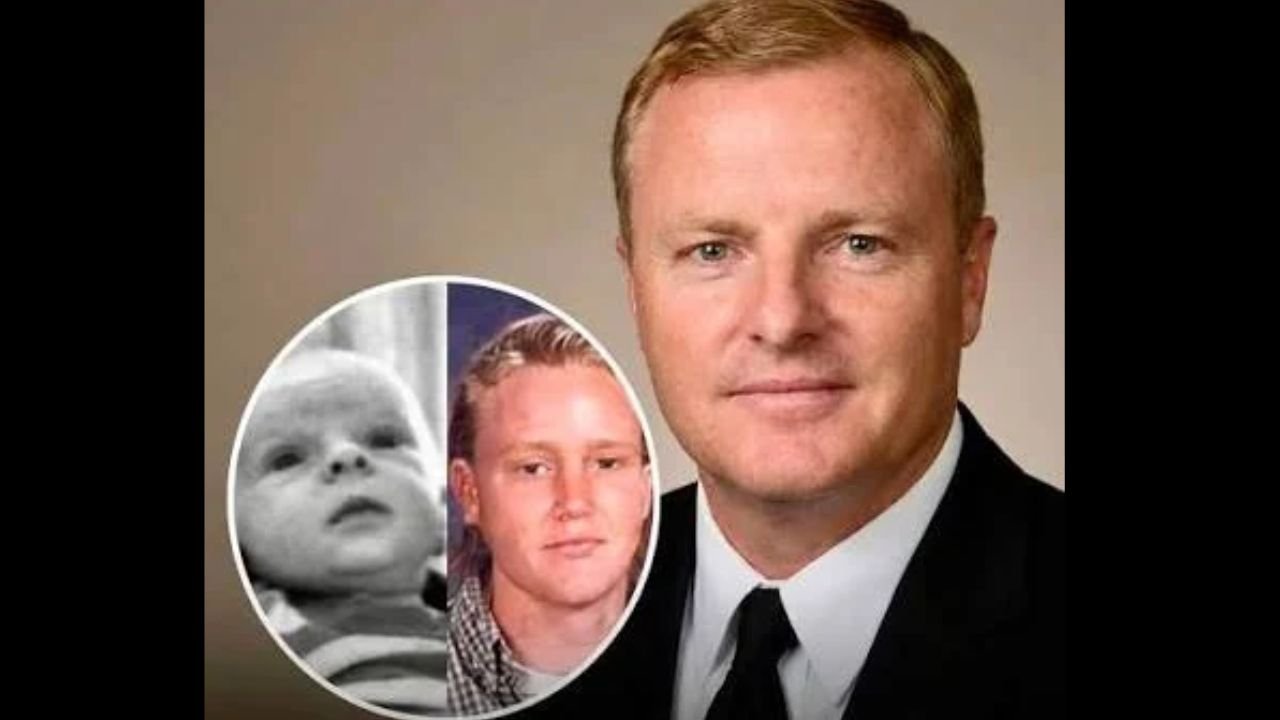
Steve Carter discovered in 2011 that he had been reported missing as a baby in Hawaii in 1977. The 34-year-old software salesman made the discovery after recognizing his own face in an age-progressed photograph on a missing children’s website. Raised by adoptive parents in New Jersey, Carter had never suspected that his childhood was connected to an unresolved disappearance. His investigation eventually revealed his original name, the circumstances surrounding his separation from his biological family, and the identity of a father who had spent decades without knowing what happened to him.
Who Is Steve Carter?
Steve Carter is an American man whose missing-child case was resolved after he identified himself online. He grew up in New Jersey with his adoptive parents, Steve and Pat Carter, who had adopted him from Hawaii when he was approximately four years old.
Carter always knew he was adopted. However, the information available about his early childhood was limited, and his family did not know the full circumstances that had brought him into foster care.
As an adult, he worked in software sales and lived an ordinary life. His interest in his biological background increased when he began considering his medical history while planning for a family of his own.
That curiosity eventually led him to an unexpected discovery.
The 2011 Discovery
In 2011, Carter began searching online for information about missing children. His interest was influenced by reports about Carlina White, a woman who had identified herself as a child abducted from a New York hospital.
While browsing MissingKids.com, the website of the National Center for Missing & Exploited Children, Carter came across an age-progressed photograph that looked remarkably similar to him.
The image represented a child named Marx Panama Moriarty Barnes, who had disappeared from Hawaii in 1977.
Carter noticed similarities in the facial features and recognized that the child’s age and disappearance location matched details of his own early life.
Rather than dismissing the resemblance, he contacted authorities to investigate whether the missing child could be him.
The 1977 Disappearance
The original missing-child case began in June 1977 in Hauʻula, Hawaii. Carter’s biological mother, Charlotte Moriarty, left with her infant son, Marx Panama Moriarty Barnes, who was approximately six months old.
According to accounts of the case, Charlotte took the baby out for a walk and did not return home.
The child’s biological father, Mark Barnes, reported the disappearance roughly three weeks later.
Investigators searched for the mother and baby, but the information available at the time did not lead them to the missing child.
For years, Barnes had no confirmed explanation of what had happened to his son.
Unknown to him, the baby had entered Hawaii’s child welfare system under a different identity.
The False Identity
The confusion surrounding the disappearance began when Charlotte Moriarty reportedly appeared at a stranger’s residence with her baby.
During her interactions with authorities, she provided inaccurate personal information, including names and birth details.
The infant was identified as “Tenzini” rather than Marx Panama Moriarty Barnes.
Reports indicate that Charlotte was admitted to a psychiatric facility following concerns about her behavior, while the baby was placed under the supervision of child protective services.
Charlotte subsequently left the facility, and her whereabouts remained unknown in later reporting.
Because the child’s recorded identity did not match the information in the missing-person report, authorities failed to connect the two cases.
This administrative disconnect allowed the disappearance to remain unresolved even though the child was already in state care.
Adoption in New Jersey
After entering the Hawaiian child welfare system, the boy spent more than three years in foster care.
He was eventually adopted by Steve and Pat Carter, who brought him to New Jersey and raised him as their son.
His adoptive parents gave him a stable home and were open about his adoption. However, they had received information that did not accurately reflect his original identity.
Consequently, Carter grew up without knowing that his biological father had reported him missing.
The adoption itself was not presented as a deliberate kidnapping by his adoptive parents. Instead, the case involved inaccurate identification records and a failure to connect information held by different authorities.
DNA Confirmation
After finding the photograph, Carter contacted the Honolulu Police Department and provided information about his adoption history.
Investigators reviewed the circumstances of the 1977 disappearance and compared them with his records.
DNA testing confirmed that Steve Carter was Marx Panama Moriarty Barnes, establishing the biological connection that had remained unknown for approximately 34 years.
The confirmation explained why the missing-child photograph resembled him and why his adoption history contained unusual gaps.
It also resolved the central question surrounding the disappearance: the missing baby had survived and grown up with another family.
The discovery received national attention because Carter had effectively identified himself as the subject of a decades-old missing-person investigation.
Family Reunion
Following the DNA confirmation, Carter was able to establish contact with his biological father, Mark Barnes.
For Barnes, the discovery provided answers about the son he had lost contact with in 1977.
Carter also connected with his biological half-sister, allowing him to learn more about relatives he had never known.
The reunion introduced a new dimension to Carter’s identity. He now understood both the circumstances of his adoption and the family history that had been hidden by inaccurate records.
His discovery did not erase his upbringing with his adoptive parents. Instead, it added information about his origins and connected two previously separate parts of his life.
What Happened to His Mother?
One of the unresolved questions in the case concerns Charlotte Moriarty, Carter’s biological mother.
According to published accounts, Charlotte disappeared after leaving the psychiatric facility in Hawaii.
Her actions in 1977 were central to the confusion surrounding the child’s identity, but the publicly documented information does not establish her ultimate whereabouts.
There is also insufficient verified evidence to determine precisely why she provided false information to authorities.
As of November 2026, no confirmed public update establishes what happened to Charlotte after her disappearance.
Where Is Steve Carter Now?
Carter’s story became widely known after the discovery was reported in 2012, including coverage by ABC News and other national outlets.
His experience has since been featured in accounts examining missing children, adoption records, and the role of online databases in resolving older cases.
There is limited verified public information about Carter’s current personal life in 2026. His case remains notable because the missing person himself recognized the age-progressed photograph that ultimately led to his identification.
The National Center for Missing & Exploited Children’s work with age-progression images played an important role in making that identification possible.
Final Thoughts
The Steven Carter missing kid case was resolved after 34 years when Carter recognized himself on a missing children’s website in 2011. Born Marx Panama Moriarty Barnes, he had disappeared in Hawaii as an infant, entered foster care under an incorrect name, and later been adopted by a New Jersey family.
DNA testing confirmed his identity and helped reconnect him with his biological father and half-sister. Although questions remain about his mother’s disappearance, Carter’s experience demonstrates how a single photograph and an accurate identification can provide answers to a mystery that lasted decades.