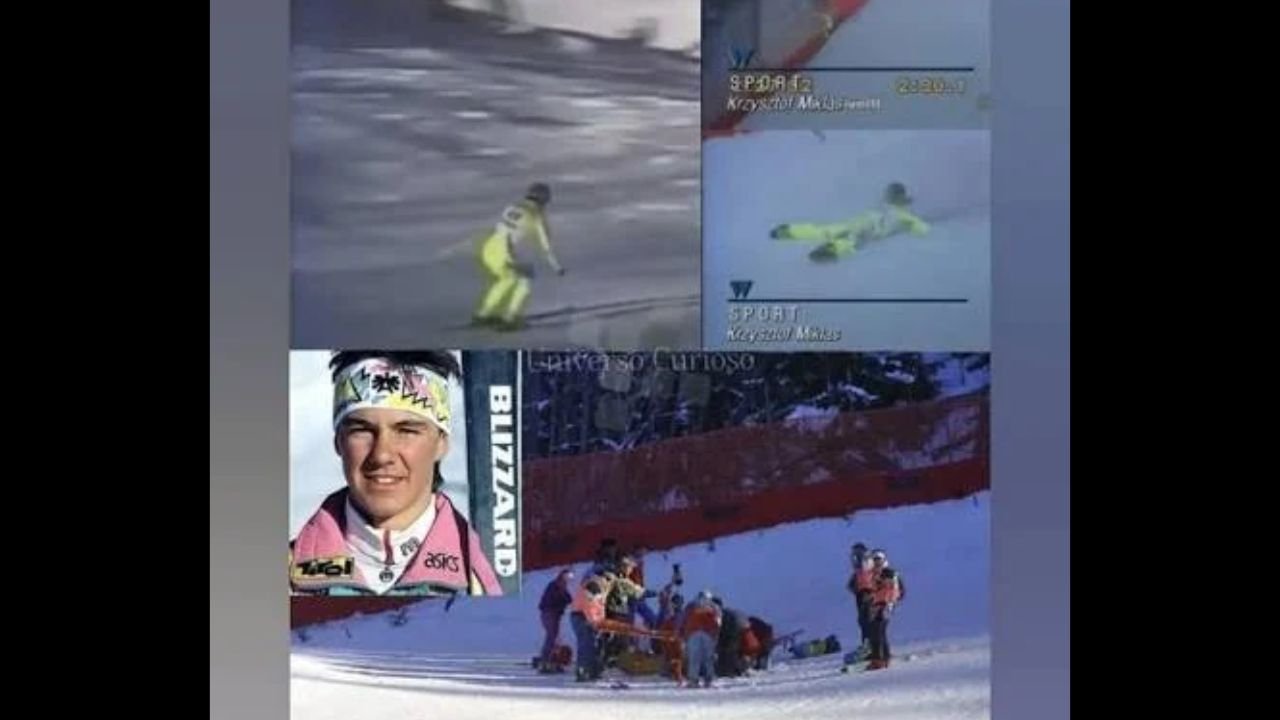
Gernot Reinstadler, a promising 20-year-old Austrian alpine ski racer, suffered a fatal accident on January 18, 1991, during a qualifying run for the Lauberhorn downhill race in Wengen, Switzerland. His ski became caught in safety netting near the finish line, causing devastating injuries. Despite emergency treatment and surgery, Reinstadler died on January 19, 1991. The tragedy led to renewed scrutiny of downhill racing safety and remains one of the sport’s most disturbing accidents.
Who Was Gernot Reinstadler?
Gernot Reinstadler was born on August 24, 1970, in Austria. He was a talented young alpine skier working toward a successful career in international downhill racing.
Reinstadler competed in a sport that demanded exceptional balance, precision, and courage. Downhill skiing was particularly challenging because racers traveled at high speeds while navigating steep slopes and difficult turns.
At just 20 years old, he was attempting to establish himself among Austria’s leading competitors.
His participation in the 1991 Lauberhorn event represented an important opportunity to demonstrate his abilities on one of the world’s most demanding downhill courses.
Unfortunately, that competition became his final appearance.
What Happened in Wengen?
The accident occurred on January 18, 1991, during a qualifying run at the Lauberhorn downhill course in Wengen, Switzerland.
Reinstadler was approaching the final section of the course, known as the Ziel-S, a difficult series of turns near the finish line.
He was reportedly traveling at approximately 80 km/h (50 mph) when he lost control of his skis.
Unable to maintain his intended racing line, he moved toward the right side of the course, where protective netting had been installed.
What initially appeared to be a high-speed fall quickly developed into a life-threatening accident.
How Did the Crash Happen?
The most dangerous moment occurred when Reinstadler slid into the safety barriers.
The tip of one ski became caught in the relatively large openings of the protective netting.
Instead of sliding freely along the barrier, his lower body was suddenly restrained while the rest of his body continued moving forward.
His ski binding reportedly did not release during the impact.
The resulting rotational force placed enormous pressure on his pelvis and surrounding tissues.
The netting, which had been installed to protect competitors from leaving the course, became a critical factor in the severity of the crash.
The accident exposed the dangers associated with older barrier designs, particularly when equipment could become trapped in the mesh.
What Injuries Did He Suffer?
Reinstadler sustained catastrophic pelvic injuries and severe damage to major blood vessels.
The sudden twisting force caused extensive trauma around his pelvis, groin, and lower abdomen.
These injuries resulted in massive internal bleeding, creating an immediate medical emergency.
After the initial impact, he continued sliding down the slope before coming to a stop.
Emergency personnel rushed to assist him, recognizing the seriousness of his condition.
The injuries were especially dangerous because damage to large blood vessels can cause rapid blood loss that is extremely difficult to control.
Despite the immediate response, his condition remained critical.
Emergency Hospital Treatment
Following the accident, medical teams arranged for Reinstadler to be transported by helicopter to a hospital in Interlaken, Switzerland.
Doctors performed emergency surgery in an attempt to repair his injuries and control the bleeding.
He also required extensive blood transfusions because of the severity of his blood loss.
However, the damage was too extensive for the medical team to overcome.
Gernot Reinstadler died on January 19, 1991, at the age of 20, approximately one day after the accident.
His death devastated his family, teammates, coaches, and the international skiing community.
Was the Accident Televised?
The accident became particularly well known because television cameras recorded the crash during the Wengen event.
Footage showed Reinstadler losing control near the finish area before colliding with the protective barrier.
The recording subsequently became one of the most widely discussed examples of the dangers associated with competitive downhill skiing.
Decades later, clips of the accident continue circulating online, often accompanied by discussions about ski equipment and course safety.
However, the footage contains distressing scenes and should be approached with sensitivity toward the athlete and his family.
Why Were the Races Cancelled?
The seriousness of Reinstadler’s injuries immediately affected the Lauberhorn competition.
Following the accident and his subsequent death, organizers cancelled the remaining 1991 Wengen World Cup races.
The decision reflected the profound impact of the tragedy on athletes and officials.
Competitors were shaken by the loss of a young skier who had been participating in the same event.
The cancellation also highlighted concerns about whether the existing protective barriers were adequate for high-speed downhill racing.
What Safety Changes Followed?
Reinstadler’s death became an important turning point in discussions about alpine skiing safety.
The accident highlighted the need for protective netting designed to prevent skis and other equipment from becoming trapped.
Fine-mesh safety barriers subsequently became an increasingly important feature of downhill course protection.
The tragedy also strengthened attention to ski-binding release mechanisms, barrier placement, and the management of dangerous course sections.
Modern downhill racing uses multiple protective measures, including improved netting systems, carefully positioned barriers, and detailed course inspections.
Although no safety system can eliminate every risk, these developments aim to reduce the likelihood of similarly catastrophic injuries.
Gernot Reinstadler’s Legacy
More than 35 years after the accident, Gernot Reinstadler is remembered as a young Austrian skier whose life ended during a qualifying run at Wengen.
His death remains a reminder of the extraordinary risks involved in competitive downhill racing.
The tragedy demonstrated that safety equipment must not only prevent athletes from leaving the course but also avoid creating additional hazards during high-speed impacts.
Reinstadler never had the opportunity to fulfill his potential as an international ski racer.
Yet his accident continues to be discussed whenever questions arise about protective barriers, equipment standards, and athlete safety.
The January 1991 crash remains one of alpine skiing’s most consequential tragedies, remembered both for the loss of a promising athlete and for the safety lessons that followed.
Tighten this to 800 wordsAdd a brief facts timelineUse more sensitive injury wording