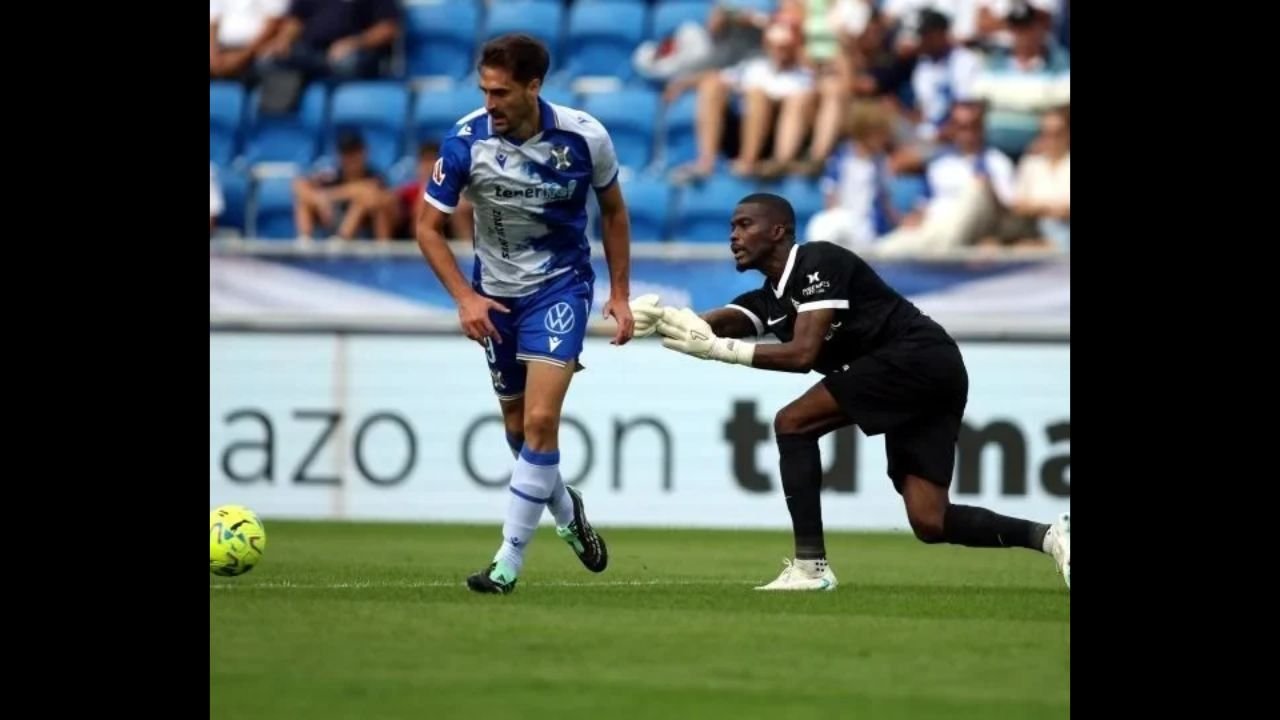
Spanish footballer Jesús de Miguel reportedly died at the age of 30 after suffering a devastating injury during a Segunda División match between CD Tenerife and FC Andorra. The incident occurred in the 96th minute when Andorra goalkeeper Jesús Owono rushed forward to challenge for a long ball and collided with the striker.
De Miguel collapsed on the pitch and reportedly suffered a cardiorespiratory arrest. Despite emergency resuscitation and intensive hospital treatment, reports state that he died on Tuesday, November 3, 2026, without regaining consciousness.
The incident has raised serious questions about player safety, emergency medical intervention, and the circumstances surrounding the challenge.
What Was the Injury?
According to accounts of the match, Jesús de Miguel sustained severe blunt-force trauma to his chest and head during a collision with goalkeeper Jesús Owono.
The impact reportedly occurred when Owono advanced outside his penalty area to intercept a long ball.
As the goalkeeper jumped to make a clearance, his raised knee made forceful contact with De Miguel’s upper body.
The striker was unable to continue playing and collapsed almost immediately.
The reported injury was particularly serious because it involved the chest, where a powerful impact can interfere with normal heart function.
However, the precise medical mechanism responsible for his cardiac arrest would require confirmation through clinical or forensic findings.
How It Happened
The collision occurred during the 96th minute of Tenerife’s match against FC Andorra.
De Miguel was pursuing a long pass near the centre circle when Owono came forward from his goalkeeping position.
Both players approached the ball at speed.
Owono reportedly jumped with his knee raised while attempting to clear it, resulting in heavy contact with the Tenerife forward.
The impact left De Miguel visibly distressed.
He briefly grabbed his torso before falling backward onto the grass.
Within moments, he appeared motionless, prompting immediate concern from players and match officials.
Immediate Collapse
De Miguel reportedly lost consciousness shortly after the collision.
Players from both teams quickly recognised the seriousness of the situation and signalled for medical assistance.
Emergency personnel rushed onto the pitch to assess his condition.
The incident was no longer being treated as an ordinary football injury.
Medical responders reportedly identified a cardiorespiratory arrest, meaning the player’s circulation and breathing had become critically compromised.
Immediate resuscitation was necessary to maintain blood flow to vital organs.
The match was suspended while emergency treatment continued.
Cardiac Arrest
A cardiorespiratory arrest is a life-threatening emergency involving the failure of effective circulation and breathing.
When the heart stops pumping blood adequately, oxygen delivery to the brain and other organs is interrupted.
Without rapid treatment, severe neurological injury can occur within minutes.
In De Miguel’s reported case, the arrest followed a powerful collision involving his chest.
Blunt chest trauma can sometimes trigger dangerous disturbances in heart rhythm or cause other serious internal injuries.
Nevertheless, it would be medically inaccurate to identify a specific mechanism without confirmed examination results.
The available account establishes a reported connection between the collision and the subsequent emergency, rather than a definitive forensic diagnosis.
Emergency CPR
Medical teams reportedly began cardiopulmonary resuscitation (CPR) shortly after De Miguel collapsed.
CPR involves repeated chest compressions intended to maintain some blood circulation when the heart is no longer pumping effectively.
Emergency personnel continued resuscitation efforts while preparing him for hospital transport.
Reports indicate that responders were able to temporarily restore a pulse during the ambulance journey.
Although this represented an important medical development, it did not guarantee recovery.
The duration of impaired circulation and the severity of the underlying injury remained major concerns.
Hospital Treatment
De Miguel was transported to Hospital Universitario de Nuestra Señora de Candelaria in Tenerife.
He was admitted for intensive medical treatment following the emergency.
Reports indicated that his vital signs were initially stabilised, but his neurological condition remained extremely serious.
He reportedly required life-support measures while doctors monitored his condition.
Despite continued treatment, his neurological status deteriorated.
The accounts supplied indicate that he never regained consciousness.
An exact diagnosis of brain death should not be assumed without formal medical confirmation, because brain death is a specific clinical determination.
When Did He Die?
CD Tenerife reportedly announced De Miguel’s death at approximately 8:00 a.m. on Tuesday, November 3, 2026.
The announcement came after the player had undergone emergency treatment and intensive care.
His death followed the collision during the closing stages of the match against Andorra.
The news deeply affected teammates, supporters, and members of the Spanish football community.
At just 30 years old, De Miguel was still an active professional footballer.
His sudden death brought attention to the potential consequences of high-impact collisions in competitive matches.
Was the Match Stopped?
The match was reportedly suspended immediately after the medical emergency.
Players and officials focused on obtaining urgent assistance rather than continuing the fixture.
The seriousness of De Miguel’s condition made normal play impossible.
The incident demonstrated why rapid access to trained medical personnel and emergency equipment is essential at professional sporting events.
A serious collapse requires immediate assessment, resuscitation when indicated, and prompt transport for specialist care.
Police Investigation
Reports indicate that Spain’s National Police Homicide Division opened a judicial inquiry into the circumstances surrounding the death.
The investigation reportedly includes consideration of whether any criminal negligence or involuntary manslaughter occurred.
Such an inquiry does not automatically mean that a crime was committed.
Investigators may examine match footage, medical evidence, witness statements, and the circumstances of the challenge.
No criminal responsibility should be attributed to goalkeeper Jesús Owono without an established legal finding.
Sporting disciplinary proceedings and criminal investigations are separate processes with different standards.
Football Safety Concerns
The reported tragedy has renewed discussion about dangerous collisions between goalkeepers and attacking players.
Goalkeepers sometimes leave their penalty areas to intercept long passes, creating situations where players approach the ball at considerable speed.
When one player jumps with a raised knee, the risk of serious contact may increase.
Football regulations allow referees to penalise challenges considered careless, reckless, or involving excessive force.
However, the medical outcome alone does not establish whether a particular challenge meets the legal standard for criminal wrongdoing.
The incident also highlights the importance of emergency medical preparedness at every professional match.
Final Words
Jesús de Miguel’s reported fatal injury followed a collision with FC Andorra goalkeeper Jesús Owono during the 96th minute of a Segunda División match.
The Tenerife striker reportedly suffered severe chest and head trauma, collapsed on the pitch, and experienced a cardiorespiratory arrest.
Despite CPR, emergency transportation, and intensive hospital treatment, reports state that he died on November 3, 2026, at the age of 30.
While the precise medical findings and any legal consequences require authoritative confirmation, the incident has become a painful reminder of the risks associated with high-impact collisions in professional football.